
About the Project
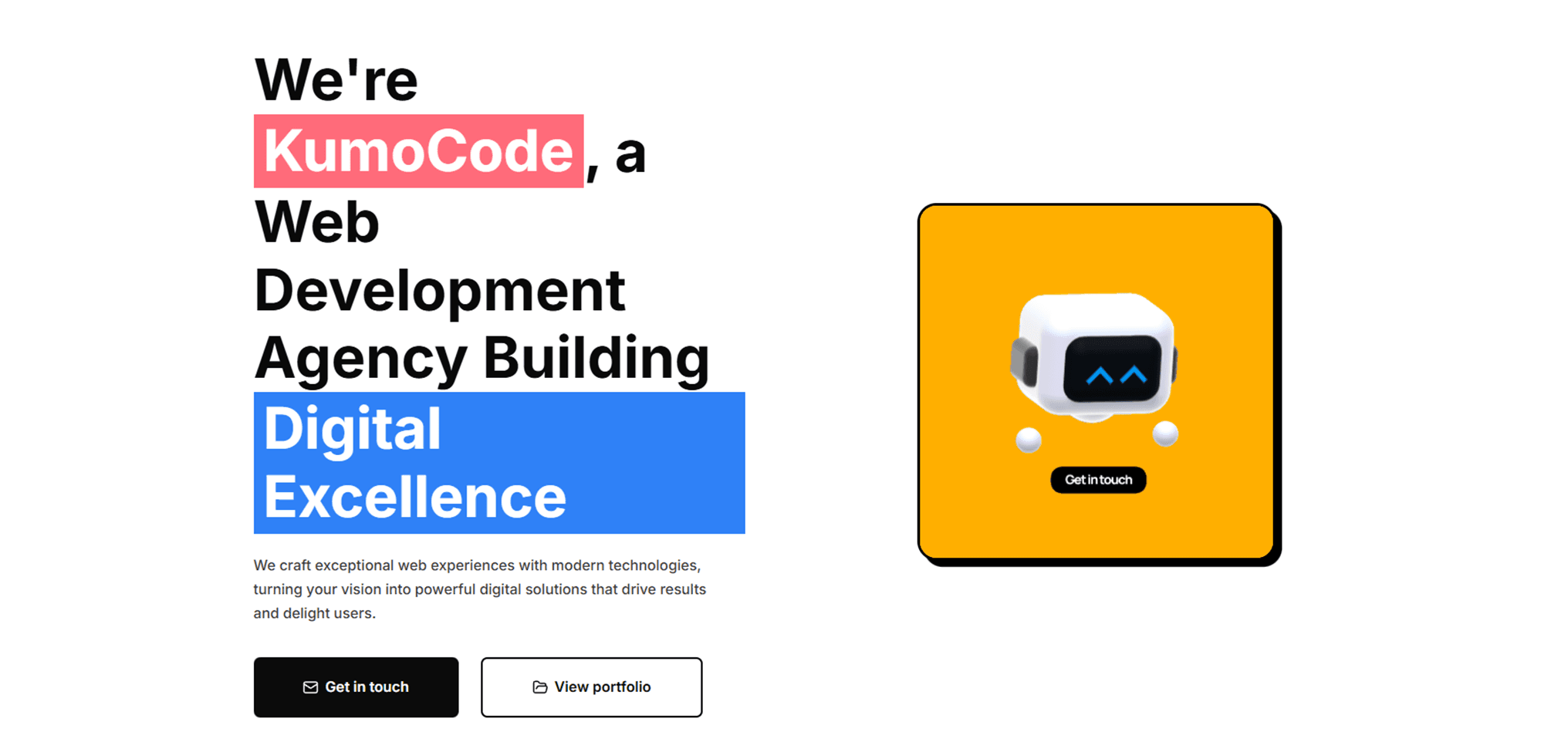
Kumocode is a South African WordPress development agency specializing in high-performance, scalable, and SEO-driven websites. Unlike traditional agencies that rely on heavy themes and plugin stacks, we’ve built our expertise around modern web architecture — combining headless WordPress, Next.js, and custom SEO frameworks to create fast, future-proof websites.
When it came to building our own website, we had a unique opportunity: to create a live case study that demonstrates exactly what we build for clients. Kumocode.co.za serves as working proof that WordPress can be transformed from a slow, plugin-dependent platform into a performance-first system that competes with modern web technologies.
This case study breaks down how we built our own website, the technical decisions we made, and the measurable results we achieved.
The Challenge: Proving WordPress Can Be Fast
WordPress powers over 43% of websites globally, but it has a reputation problem. Most people assume WordPress sites are inherently slow, plugin-heavy, and difficult to optimize for search engines.
The reality is different: WordPress isn’t slow — poorly architected WordPress sites are slow.
We needed to prove this. Our challenge was to build a website that:
- Loads in under one second on mobile devices
- Achieves perfect or near-perfect Core Web Vitals scores
- Ranks competitively for technical keywords in the South African market
- Demonstrates modern development practices
- Remains easy for our team to update and maintain
- Serves as a reference point for potential clients
Traditional WordPress wasn’t going to cut it. Heavy page builders like Elementor or Divi would contradict everything we stand for. Even clean, well-coded WordPress themes still carry performance limitations due to how WordPress renders pages dynamically.
We needed a fundamentally different approach.
The Solution: Headless WordPress + Next.js
We implemented a headless WordPress architecture with Next.js powering the frontend — the same modern stack we build for performance-focused clients.
Understanding Headless Architecture
In a traditional WordPress setup, WordPress handles both content management and what visitors see. Every time someone visits a page, WordPress dynamically generates the HTML using PHP, queries the database, loads theme files, and processes plugins. This works, but it’s slow.
Headless WordPress separates these responsibilities. WordPress becomes a pure content management system — a place where our team creates and organizes content — while a separate frontend technology handles what visitors actually see.
Here’s how it works in practice:
Our content team uses the familiar WordPress admin panel to write blog posts, create portfolio pages, and manage case studies. WordPress stores this content in its database. But instead of using WordPress to display this content, we built a Next.js frontend that fetches content from WordPress via its REST API and generates lightning-fast static pages.
The visitor never touches WordPress directly. They see pre-built HTML pages served from a content delivery network, loading almost instantly from wherever they are in the world.
The Technology Stack
WordPress Backend:
We configured WordPress purely as a headless content management system. The WordPress installation runs on our server but has no public-facing theme. Instead, we built a clean content structure using:
- Custom post types for blogs, case studies, and portfolio items
- Advanced Custom Fields for flexible content entry without page builders
- A minimal plugin setup — just what’s essential for content management
- Custom REST API endpoints optimized for our Next.js frontend
- Proper security configurations since WordPress isn’t publicly accessible
This keeps our WordPress installation lean, secure, and fast. Our content editors get the WordPress experience they’re familiar with, but without any of the performance baggage.
Next.js Frontend:
The public-facing website is built with Next.js, a React framework optimized for production websites. Next.js generates static HTML pages from our WordPress content, which means:
- Pages are pre-rendered at build time, not when visitors request them
- Content loads instantly from edge servers around the world
- Images are automatically optimized and converted to modern formats
- Only the JavaScript needed for each page actually loads
- The site can handle massive traffic without server strain
When we publish new content in WordPress, our deployment pipeline automatically rebuilds the affected pages and pushes them to our content delivery network. The entire process is automated — our team just clicks “Publish” in WordPress like normal.
Custom SEO Framework:
Most WordPress sites rely on plugins like Yoast or Rank Math for SEO. These are excellent tools for traditional WordPress, but in a headless setup, they add unnecessary overhead. We built our own SEO framework that gives us complete control over:
- Meta titles and descriptions for every page
- Structured data markup for Google’s rich results
- Canonical URLs to prevent duplicate content issues
- XML sitemaps that update automatically
- Open Graph tags for social media sharing
- Schema markup for local business, articles, and organization data
Every piece of SEO metadata is generated programmatically, stored efficiently, and delivered without plugin bloat.
Performance Improvements: From Slow to Lightning Fast
The difference between traditional WordPress and our headless approach is dramatic.
Traditional WordPress Performance
A typical WordPress site built with themes like Divi, Elementor, or even well-coded premium themes usually performs like this:
- Page load times of 3-5 seconds on mobile networks
- Large page sizes of 2-4 megabytes
- Dozens of render-blocking scripts and stylesheets
- Heavy database queries on every page view
- Lighthouse performance scores in the 40-65 range
- Poor Core Web Vitals that hurt search rankings
These sites work, but they create friction. Visitors wait. Mobile users on slower connections abandon the site. Google sees the poor performance metrics and ranks competitors higher.
Kumocode.co.za Performance
Our headless architecture delivers completely different results:
- Page load times under 1 second, even on mobile
- Lean page sizes of 200-400 kilobytes
- Minimal JavaScript, only loading what’s necessary
- No database queries per visitor — everything is pre-rendered
- Lighthouse performance scores of 95-100
- Perfect green scores across all Core Web Vitals metrics
The technical improvements translate to real-world benefits. A visitor in Johannesburg on a 4G connection sees content appear almost instantly. Someone in Cape Town on their phone has the same smooth experience. Search engines see a fast, well-optimized site that deserves better rankings.
Core Web Vitals Achievement
Google’s Core Web Vitals are confirmed ranking factors. These metrics measure real user experience:
Largest Contentful Paint (LCP) — how quickly main content loads Our score: 0.8-1.5 seconds (Google wants under 2.5 seconds)
First Input Delay (FID) — how quickly the site responds to interactions Our score: under 50 milliseconds (Google wants under 100 milliseconds)
Cumulative Layout Shift (CLS) — whether elements shift around as the page loads Our score: under 0.05 (Google wants under 0.1)
All three metrics score green, giving us a performance advantage over competitors still using traditional WordPress.
SEO Implementation: Built for Rankings
Our custom SEO framework handles everything a plugin would do, but with better performance and more control.
Meta Management
Every page on Kumocode.co.za has optimized meta titles and descriptions. Instead of relying on automated generation, we wrote compelling, keyword-optimized metadata for every important page. Our content team can edit these directly in WordPress using custom fields we built.
Each page also declares its canonical URL, preventing duplicate content issues. We control indexing on a per-page basis, telling Google exactly which pages to rank and which to ignore.
Structured Data
We implemented comprehensive schema markup across the site. Google sees structured data about our organization, our location in South Africa, our articles, and how our pages relate to each other through breadcrumb navigation.
This structured data helps Google understand our content better and makes us eligible for rich results in search — things like article snippets, business information panels, and enhanced search listings.
Technical SEO Fundamentals
Beyond meta tags and structured data, our architecture handles crucial technical SEO elements:
Clean URL Structure: Every URL is human-readable and keyword-optimized, following best practices for hierarchy and clarity.
XML Sitemap: Our sitemap generates automatically whenever we publish content, helping Google discover and index new pages quickly.
Mobile Optimization: The site is mobile-first by design, not just responsive. Mobile performance matches or exceeds desktop.
Page Speed: Fast loading times directly impact rankings, especially on mobile. We’re consistently faster than competitors.
Crawl Efficiency: Search engines can easily crawl and understand our site structure without hitting dead ends, redirect chains, or confusing navigation.
Why This Architecture Wins for SEO
Google’s algorithm increasingly prioritizes user experience and technical performance. Sites that load fast, work well on mobile, and provide clear signals about their content rank better.
Our headless architecture gives us advantages across multiple ranking factors:
Page Experience Signals: With perfect Core Web Vitals, we send strong signals that our site provides an excellent user experience.
Mobile-First Indexing: Google primarily uses mobile versions of sites for ranking. Our mobile performance is exceptional.
Clean Technical Foundation: No plugin conflicts, no bloated code, no render-blocking resources — just clean, fast, accessible HTML.
Structured Data Implementation: Proper schema markup helps Google understand and display our content effectively.
Content Quality Signals: Fast loading means lower bounce rates and higher engagement — signals Google considers when ranking.
The result is a website built to rank in competitive searches, not just function adequately.
Value for South African Businesses
The South African digital market presents unique challenges that make performance even more critical.
Market Context
Mobile devices account for over 70% of web traffic in South Africa. Connection speeds vary widely — 4G is common but not universal, and data costs matter to users. Traditional WordPress sites that load slowly and consume lots of data create poor experiences for South African visitors.
Businesses competing online need websites that:
- Load quickly on mobile networks
- Use minimal data
- Perform well on mid-range devices
- Rank competitively in local search results
- Handle traffic without expensive server upgrades
Competitive Advantages
Our headless approach solves these challenges:
Better Mobile Performance: Smaller page sizes and faster loading create better experiences on mobile networks. Visitors don’t burn through data waiting for heavy pages to load.
Improved Rankings: When competitors use slow WordPress themes, sites with better Core Web Vitals have a ranking advantage. Technical SEO becomes a competitive differentiator.
Cost Efficiency: Static hosting is significantly cheaper than traditional WordPress hosting. No expensive performance plugins or server upgrades needed. Better ROI on digital marketing spend.
Scalability: Traffic spikes don’t crash the site or require emergency server upgrades. The architecture handles growth naturally.
Future-Proof Technology: Modern tech stack attracts better developers and provides flexibility as business needs evolve.
Business Outcomes Beyond Metrics
While we can measure page speed and Lighthouse scores, the real value shows up in business results.
Organic Search Performance
Our technical foundation supports our content strategy. When we publish valuable content, it has the best chance of ranking because the technical SEO is solid. We rank competitively for technical keywords in the South African market despite being a newer domain.
User Experience
Visitors don’t wait for pages to load. Navigation is instant. The experience feels professional and modern. This builds trust — especially important when we’re trying to convince potential clients to trust us with their projects.
Client Conversations
When potential clients visit our site and see how fast it loads, it starts the conversation on the right foot. We’re not just talking about performance — we’re demonstrating it. The site itself is the best sales tool we have.
Reduced Maintenance
No plugin updates to manage. No theme compatibility issues. No security vulnerabilities from outdated plugins. The site is stable, secure, and easy to maintain. Our development team spends time building features, not fighting fires.
Implementation Approach
For clients interested in this architecture, we follow a structured process:
We start by understanding content needs and mapping out a custom content structure in WordPress. We design the information architecture, plan URL structure for SEO, and determine what custom fields and content types are necessary.
Next, we set up WordPress as a headless CMS, implementing the backend infrastructure needed to manage content efficiently. We build the custom fields, configure the API, and set up content workflows.
The frontend development happens in parallel — building component libraries, implementing the design, and integrating with the WordPress API. We focus on performance from day one, implementing optimization techniques throughout the build process.
SEO implementation is built in, not bolted on. We create the meta management system, implement structured data, build the sitemap generation, and ensure every technical SEO element is handled properly.
Before launch, we migrate content from any existing site, set up proper redirects, configure DNS and deployment, and thoroughly test performance and functionality.
Technologies Used
Backend:
- WordPress (headless configuration)
- Advanced Custom Fields Pro
- Custom REST API integration
- MySQL database
Frontend:
- Next.js (App Router)
- React
- TypeScript
- Tailwind CSS
Hosting & Deployment:
- Vercel Edge Network for frontend
- Traditional hosting for WordPress backend
- Automated deployment pipeline
SEO & Performance:
- Custom meta framework
- Structured data implementation
- Automated sitemap generation
- Image optimization
- CDN distribution
Results & Achievements
Performance Metrics:
- Lighthouse Performance: 95-100/100
- All Core Web Vitals in green
- Page load times under 1 second
- Mobile performance matching desktop
Technical SEO:
- Complete schema markup implementation
- Automated sitemap generation
- Optimized meta tags across all pages
- Clean URL structure
Business Impact:
- Effective demonstration of capabilities
- Strong foundation for content marketing
- Professional first impression for prospects
- Reduced long-term maintenance costs
Services Demonstrated
This case study showcases our expertise in:
- Headless WordPress development
- Next.js frontend development
- Custom SEO framework creation
- Performance optimization
- Technical SEO implementation
- Modern web architecture
- Content management system integration
- Deployment and hosting optimization
Conclusion: Modern WordPress for Modern Businesses
Kumocode.co.za proves that WordPress can power fast, scalable, SEO-optimized websites when built with modern architecture. By separating content management from frontend delivery, we achieved performance levels that traditional WordPress simply cannot match.
The headless approach isn’t right for every project, but for businesses that depend on organic search traffic, need exceptional performance, or plan to scale significantly, it provides a competitive advantage.
Our own website serves as a working example of what’s possible when WordPress is combined with modern JavaScript frameworks and performance-first development practices. It’s not just a website — it’s a demonstration of how we think about web development and a preview of what we build for clients.
For South African businesses looking to compete online, performance and technical SEO are foundational to success. Our approach provides both.